


Deciding whether to order PCB assembly or a complete box build shapes cost, schedule and product risk long before production starts. This guide lays out what each option covers, how a turnkey electronics partner shifts procurement and quality responsibility, and the practical criteria engineering and purchasing teams use to qualify manufacturers. You'll get a clear walkthrough of the PCB assembly workflow (SMT and THT), the components and QA checkpoints inside a box build, and concrete ways to mitigate common risks like supply-chain disruption or weak design-for-manufacturability. We focus on the cost drivers, test strategies, and lifecycle responsibility you need to weigh whether to integrate in-house or consolidate with a turnkey EMS. Sections include definitions, process steps, comparison tables, mitigation checklists, and procurement questions to make the choice straightforward.
What Is PCB Assembly and When Is It the Right Choice?
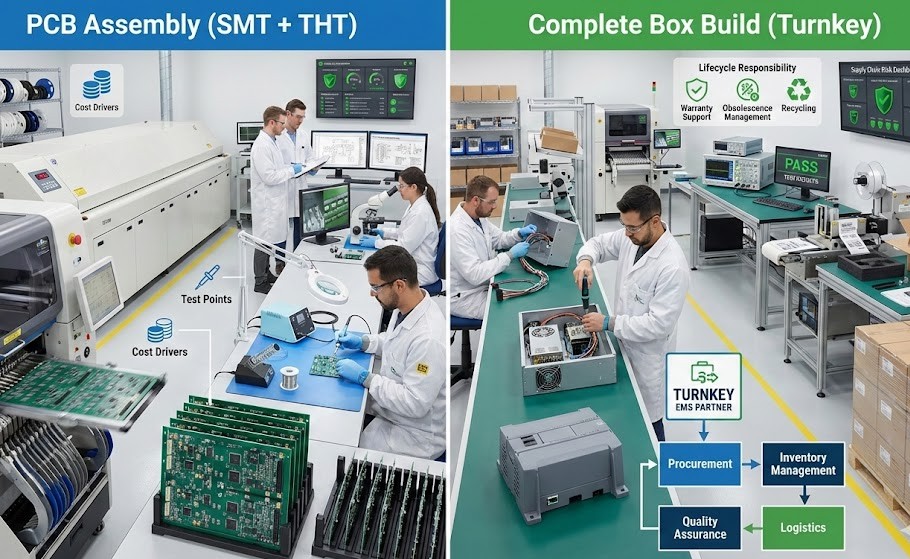
PCB assembly (PCBA) is the process of turning a bare printed circuit board into a functional board-level unit by placing components with surface-mount and through-hole techniques. Key steps include solder paste stencil application, component placement, soldering (reflow for SMT, wave or selective for THT), then inspection and electrical testing to confirm solder quality and circuit integrity. PCBA-only work is typically the most cost-effective route when the board is a module inside a larger product or when rapid prototyping and iteration are priorities. Knowing the PCBA workflow and typical test coverage helps teams decide whether downstream integration should stay with the OEM or be included in a broader assembly contract. The next section breaks the PCB assembly process into its stepwise checkpoints so you can estimate lead times and verify quality controls.
How Does the PCB Assembly Process Work?
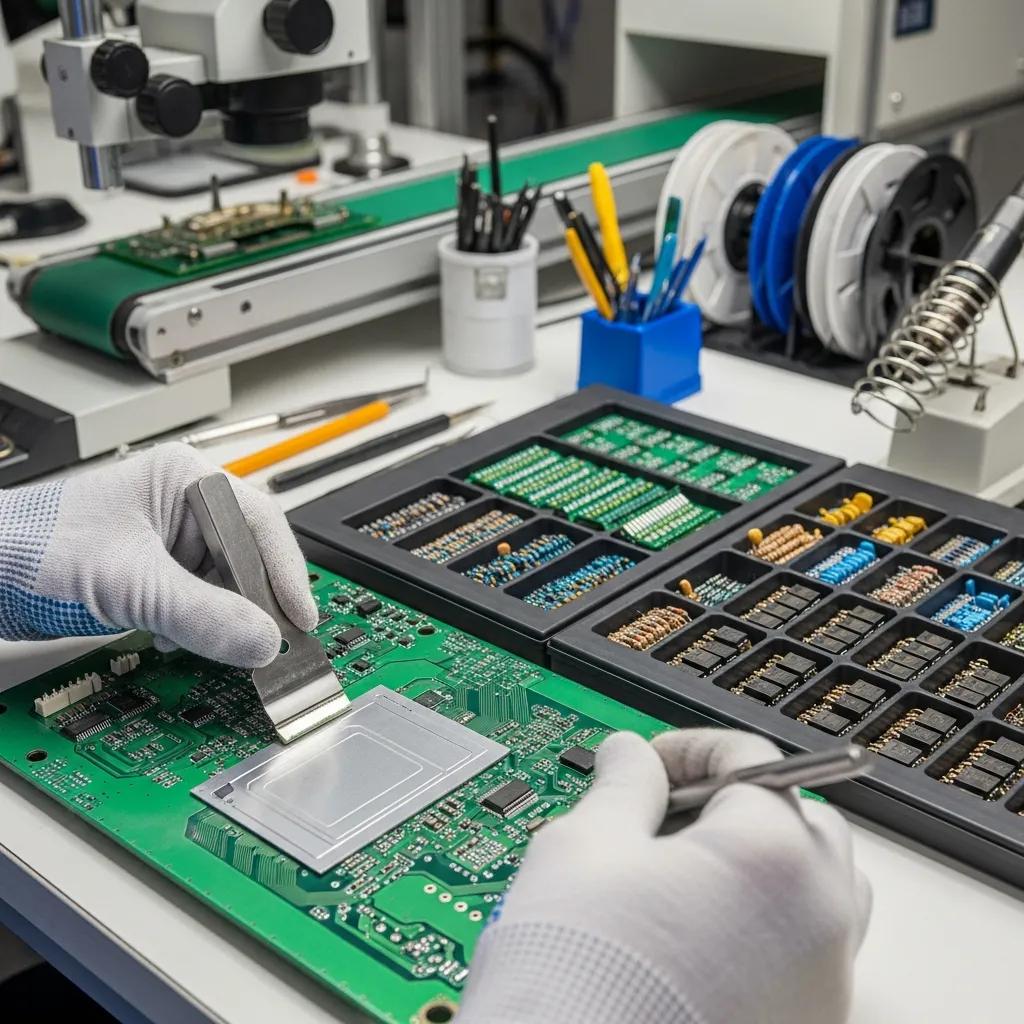
PCBA starts with design validation and a validated Bill of Materials, then moves to solder paste application, pick-and-place for SMT components, reflow soldering, and automated optical inspection (AOI) to catch tombstoning, misalignment, and solder issues. On hybrid boards, through-hole parts are assembled after SMT using wave or selective soldering, followed by visual or automated inspection. Test coverage typically includes in-circuit test (ICT) for node-level verification and functional tests to confirm system behavior; bed-of-nails fixtures and custom test jigs are common for repeatable checks. Lead times vary with component sourcing complexity and PCB layer count; prototypes are often quicker but more manual than production runs. With this operational background, the next section compares SMT and THT choices and their trade-offs.
Different PCB assembly approaches have distinct use cases, cost profiles, and test needs. The table below summarizes those differences for quick procurement comparisons.
SMT PCB assembly High-density, small-component boards (consumer, comms) Placement machine runtime, stencil tooling, reflow profile optimization THT PCB assembly Large connectors, mechanical strength, legacy parts Manual labor or selective soldering, fixture complexity Hybrid SMT/THT Boards with fine-pitch ICs plus robust connectors Mixed scheduling, additional inspection and process stepsUse this comparison to match assembly approach to your component mix and product needs. The following section explains the key benefits and limitations of PCBA-only work.
What Are the Key Benefits and Limitations of PCB Assembly Services?
PCBA-only production shortens time-to-prototype and lowers unit cost for board-level deliveries because it avoids enclosure and cabling procurement and leverages efficient SMT lines for medium volumes. Benefits include faster iteration during design validation, focused electrical testing (AOI, ICT), and lower tooling or NRE compared with full-system builds. Limitations appear when the product needs mechanical integration, firmware loading, or system-level functional verification—those gaps push integration risk back to the OEM and can lengthen time-to-market when multiple vendors are involved. Major cost drivers are component scarcity, BGA rework complexity, PCB layer count, and test-fixture development; early DFM reviews address many of these drivers. Understanding these trade-offs helps teams decide whether to stop at PCBA or move to a complete box build.
What Is Box Build Assembly and Why Choose It for Complex Electronics?
A box build is full electromechanical integration: a single supplier assembles populated PCBs, cable and wire harnesses, enclosures and brackets, mechanical hardware, power subsystems, and firmware, delivering a market-ready unit. The process ties electrical assembly to mechanical assembly and system-level testing (functional tests, burn-in, and final inspection) so the device is verified in its intended operational state. Customers choose box build when they need one shipment that is ready for deployment, when they want to shift supply-chain ownership to a partner, or when internal capacity cannot handle final integration. This section outlines typical box build scope, then explains the advantages over multi-vendor approaches.
What Does a Typical Box Build Include?
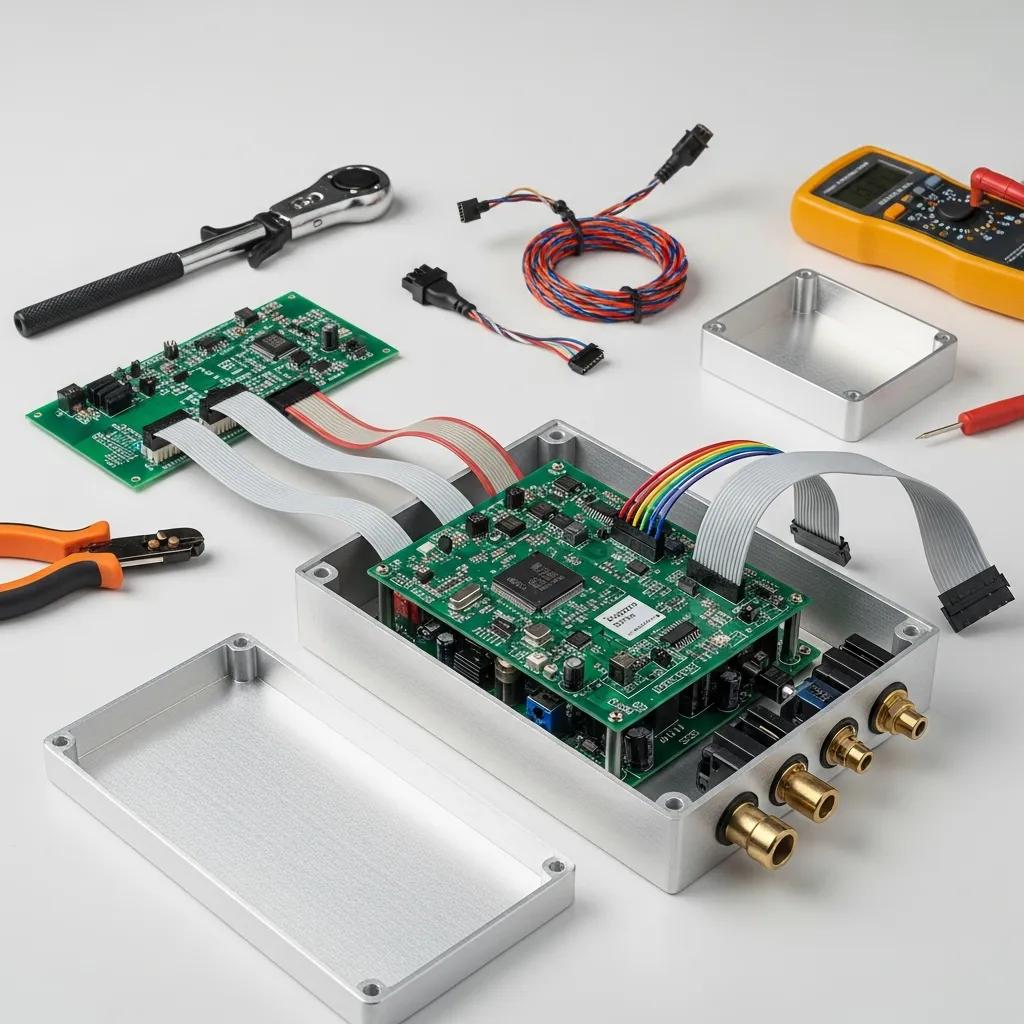
A box build typically covers everything from the populated PCB to the packaged product. Below is the typical scope of deliverables:
- Populated PCBs: SMT and THT components assembled per IPC standards
- Cable and wire harnesses: Custom cables, connectors, and routing
- Enclosures and brackets: Metal or plastic housings, mounting hardware
- Power subsystems: Power supplies, battery management, distribution
- Firmware and software: Programming, calibration, configuration
- System-level testing: Functional verification, burn-in, final QA
- Packaging and labeling: Retail or industrial packaging, compliance labels
Box build consolidates multiple disciplines under one roof, reducing coordination overhead and improving accountability for the final product.
What Are the Advantages of Turnkey Box Build Services?
When all assembly, test, and logistics operations sit under one contract, the OEM transfers responsibility for vendor coordination, incoming inspection, work-in-process inventory, and schedule recovery to the EMS partner. Turnkey box build services provide several key advantages:
- Single point of accountability: One supplier owns the entire deliverable, simplifying communication and problem resolution
- Reduced time-to-market: Parallel procurement and assembly compress schedules compared to sequential multi-vendor approaches
- Lower total cost: Consolidated purchasing power, reduced shipping between facilities, and elimination of incoming inspection at multiple sites
- Quality consistency: End-to-end process control from component receipt through final test ensures uniform quality standards
- Supply chain resilience: Experienced EMS partners maintain component buffers and alternative sources to mitigate shortages
How Do You Choose Between PCB Assembly and Box Build?
The decision between PCBA-only and full box build depends on your internal capabilities, time-to-market pressure, and total cost of ownership. Consider these factors:
- Internal integration capacity: If your team has mechanical assembly capability and prefers to control final integration, PCBA-only may be sufficient
- Product complexity: Multi-board systems with custom cabling and firmware are better suited to turnkey box build
- Volume and mix: High-mix, low-volume production often benefits from box build consolidation to reduce coordination overhead
- Time-to-market: Aggressive schedules favor turnkey approaches that parallelize procurement and assembly
- Quality requirements: Regulated industries (medical, aerospace, defense) benefit from single-source accountability and certified processes
Partner with i-TECH e-Services
At i-TECH e-Services, we offer both PCB assembly and complete box build services to match your project requirements. Our AS9100D, ISO 13485:2016, and ITAR certifications ensure we meet the most demanding quality standards across aerospace, defense, medical, and industrial markets. Whether you need rapid prototyping of a single board or turnkey production of a complex electromechanical system, our engineering team is ready to help you choose the right approach.
Contact us today to discuss your project requirements and get a quote.