


Box build assembly services provide OEMs with a complete, turnkey manufacturing solution that goes beyond bare board assembly. A qualified box build partner handles everything from PCB assembly and cable harness integration to mechanical enclosure assembly, firmware loading, functional testing, and final packaging—delivering a fully finished, production-ready product from a single facility. For companies in aerospace, defense, medical, and industrial markets, this model eliminates multi-vendor coordination, compresses lead times, and ensures end-to-end traceability under one quality management system.
Key Takeaways
- Box build assembly is the final stage of electronics manufacturing where populated PCBAs, wiring, mechanical components, and enclosures are integrated into a complete, functional system.
- Outsourcing box build to a single partner eliminates handoff risks between multiple subcontractors and gives OEMs one point of accountability for quality, schedule, and cost.
- A capable box build manufacturer offers in-house PCB assembly, cable and wire harness fabrication, electromechanical integration, and functional testing—all under one roof.
- Industries with strict regulatory requirements—including aerospace and defense, medical devices, and industrial controls—rely on box build partners with AS9100D, ISO 13485, and ITAR registrations.
- The box build model scales from prototype to production volume without requiring OEMs to re-qualify vendors at each stage.
- Choosing the right partner requires evaluating certifications, in-house capabilities, NPI support, and the ability to manage complex, multi-discipline builds.
What Are Box Build Assembly Services?
Box build assembly—also called systems integration or electromechanical assembly—is the process of integrating all electronic and mechanical sub-assemblies into a finished enclosure or chassis. While PCB assembly produces a populated circuit board, box build takes that board and combines it with power supplies, displays, connectors, cable harnesses, thermal management components, labels, and the enclosure itself to produce a complete, shippable product.
The term "box build" reflects the end goal: a fully assembled, tested, and packaged unit—ready for the OEM's customer. This can range from a simple single-board enclosure to a complex multi-rack system with dozens of sub-assemblies, hundreds of wire terminations, and extensive functional test requirements.
At i-TECH e-Services, box build assembly is performed in-house alongside our PCB assembly and cable harness operations, which means every component of the final system is built, inspected, and tested within one quality-controlled facility.
What Does a Typical Box Build Include?
The scope of a box build program varies by product complexity, but most engagements include some combination of the following deliverables:
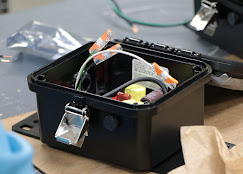
- Mechanical enclosure integration: Mounting PCBAs, power supplies, fans, heat sinks, and other components into metal or plastic housings using fasteners, standoffs, or custom brackets.
- Cable and wire harness installation: Routing, terminating, and securing custom cable assemblies per IPC/WHMA-A-620 workmanship standards.
- Thermal management: Installing heat sinks, thermal pads, fans, or ducting to meet operating temperature specifications.
- Firmware and software loading: Programming microcontrollers, FPGAs, or embedded systems with production firmware before final test.
- Labeling and marking: Applying regulatory labels (UL, CE, FCC), serial number barcodes, and customer-specific branding.
- Functional and electrical testing: Performing powered-on functional tests, hi-pot testing, continuity checks, and burn-in as required by the product specification.
- Cosmetic inspection: Final visual inspection for scratches, dents, label placement, and overall workmanship before packaging.
- Packaging and shipment: Custom packaging with ESD protection, foam inserts, and documentation kits—ready for distribution or direct delivery to the OEM's end customer.
Why Do OEMs Outsource Box Build Assembly?
For many OEMs, the decision to outsource box build assembly is driven by three factors: cost efficiency, operational focus, and single-vendor accountability.
Cost efficiency: Building and maintaining an in-house box build operation requires capital investment in assembly fixtures, test equipment, inventory management systems, and trained technicians. Outsourcing converts these fixed costs into variable costs that scale with production volume. OEMs pay for what they need, when they need it—without carrying overhead during demand troughs.
Operational focus: OEMs that outsource box build free their engineering teams to focus on product design, firmware development, and market strategy rather than managing production floor logistics. This is especially valuable for companies with lean engineering teams that need to maximize R&D output.
Single-vendor accountability: When one partner owns the entire build—from bare board through final test—there is one purchase order, one quality system, one point of contact, and one entity responsible for delivery. This eliminates the finger-pointing that often occurs when PCB assembly, cable harness fabrication, mechanical integration, and testing are split across three or four vendors.
How Box Build Assembly Reduces Production Risk
Every handoff between vendors introduces risk: shipping damage, miscommunication on revision levels, incompatible workmanship standards, and schedule slippage. Box build assembly performed under one roof eliminates most of these failure points.
Fewer handoffs: When PCBAs, cable harnesses, and mechanical sub-assemblies are all built in the same facility, there are no inter-vendor shipments, no incoming inspection queues at each new vendor, and no opportunities for components to sit on a dock waiting for the next production step.
Integrated quality gates: A single quality management system governs every process step. Inspection criteria, non-conformance procedures, and corrective action processes are consistent from SMT placement through final box build test. This is critical for programs governed by AS9100D or ISO 13485 where process control and documentation must be unbroken.
Full traceability: Lot codes, date codes, serial numbers, and test results are captured in one MES or ERP system from start to finish. If a field failure occurs, the manufacturer can trace the issue back to the specific board, cable, and assembly operator—without requesting records from multiple suppliers.
Industries That Rely on Box Build Assembly Services
Box build assembly is particularly important in industries where product reliability, regulatory compliance, and documentation requirements make multi-vendor supply chains impractical.
Aerospace and defense: Avionics enclosures, radar sub-systems, and ground support equipment require AS9100D-certified assembly, ITAR-compliant handling, and extensive first article inspection (FAI) documentation. Box build consolidation ensures that every component in the system is assembled under one controlled process.
Medical devices: Patient-connected and diagnostic instruments must be assembled under ISO 13485 quality systems with full device history records (DHR). Box build partners with medical manufacturing experience understand FDA design controls and can support DHF documentation requirements.
Industrial electronics: Control panels, power distribution units, and monitoring systems for factory automation, oil and gas, and energy infrastructure demand rugged construction, extensive wiring, and powered-on functional testing before shipment.
Defense and communications: Ruggedized enclosures for tactical communications, electronic warfare, and C4ISR systems require conformal coating, potting, environmental stress screening (ESS), and MIL-STD compliance—all managed within the box build scope.
What to Look for in a Box Build Manufacturing Partner
Not every contract electronics manufacturer has the capabilities or experience to execute complex box build programs. When evaluating potential partners, OEMs should assess the following:
- Relevant certifications: AS9100D for aerospace, ISO 13485 for medical, ITAR registration for defense, and IPC-A-610 / IPC/WHMA-A-620 for workmanship standards. These certifications are not optional—they are prerequisites for regulated programs.
- In-house capabilities: Does the manufacturer perform PCB assembly, cable harness fabrication, and functional testing in-house? Or are they subcontracting critical steps? The more processes under one roof, the fewer risks.
- NPI and engineering support: A strong partner provides design-for-manufacturability (DFM) and design-for-testability (DFT) feedback during the new product introduction (NPI) phase—before production begins.
- Scalability: Can the partner handle both low-volume prototype builds and mid-to-high-volume production runs without changing processes or personnel?
- Program management: Complex box builds require dedicated program managers who coordinate scheduling, material procurement, engineering changes, and customer communication across multiple work centers.
From Prototype to Production: Scaling a Box Build Program
The most efficient path to production-ready box build is to start with a partner who can support the full lifecycle—from rapid prototyping through volume manufacturing.
During the prototype phase, the manufacturer works with the OEM to validate the assembly process, identify design issues, and develop test procedures. Fixture design, cable routing, and assembly sequence are refined during this stage so that production ramp-up is predictable and repeatable.
Once the design is locked, the same team that built the prototype transitions to pilot production and then full-rate production. Because the tooling, fixtures, test programs, and operator training are already in place, there is no re-qualification step—and no risk of introducing new failure modes from a different vendor.
This continuity is one of the primary advantages of choosing a box build partner with integrated prototyping capabilities. The learning curve from prototype to production is captured, documented, and applied—rather than lost in a vendor transition.
Frequently Asked Questions
What is the difference between PCB assembly and box build assembly?
PCB assembly produces a populated circuit board—components soldered to a bare PCB. Box build assembly takes that completed PCBA and integrates it with cable harnesses, mechanical enclosures, power supplies, displays, and other sub-assemblies to produce a fully finished, tested, and packaged product ready for the end user.
What certifications should a box build assembly partner have?
At a minimum, look for IPC-A-610 and IPC/WHMA-A-620 workmanship certifications. For regulated industries, AS9100D (aerospace), ISO 13485 (medical), and ITAR registration (defense) are essential. These certifications ensure the manufacturer operates under a controlled quality management system with documented processes and traceability.
How long does a typical box build assembly project take?
Lead times depend on product complexity, component availability, and volume. Simple single-board enclosures may take 2–3 weeks from material receipt to shipment. Complex multi-rack systems with custom cable harnesses and extensive functional testing can take 6–10 weeks. A qualified partner will provide a detailed production schedule during the NPI phase.
Can a box build partner handle both prototypes and production volumes?
Yes—this is one of the key advantages of choosing a partner with integrated prototyping and production capabilities. The same facility, tooling, and team that build your prototype can scale to mid-and high-volume production without re-qualification, ensuring process continuity and faster time to market.
What industries commonly use box build assembly services?
Box build assembly is widely used in aerospace and defense, medical devices, industrial electronics, telecommunications, and energy infrastructure. These industries require fully integrated, tested systems with regulatory documentation and end-to-end traceability that single-vendor box build programs provide.
How does box build assembly reduce total cost of ownership for OEMs?
By consolidating PCB assembly, cable harness fabrication, mechanical integration, testing, and packaging with one partner, OEMs eliminate duplicate incoming inspections, inter-vendor shipping costs, and the overhead of managing multiple purchase orders and quality systems. This single-source model also reduces inventory carrying costs and simplifies supply chain management.
Ready to discuss your next box build project? i-TECH e-Services provides full-service box build assembly, PCB assembly, and cable and wire harness manufacturing from our AS9100D- and ISO 13485-certified facility in Norcross, Georgia. Request a quote to get started.