


Choose a conformal coating by matching the polymer chemistry to the board's operating environment, not by habit or price. Under IPC-CC-830, acrylic (AR) is the pragmatic default for benign indoor electronics that may need field rework, because it applies fast and redissolves in common solvents. Silicone (SR) is the choice when high temperature, thermal cycling, or condensing humidity dominates, spanning roughly -55°C to +200°C. Parylene (XY) is a vacuum-deposited, micron-thin, pinhole-free barrier for the most demanding moisture, dielectric, biocompatibility, or low-outgassing requirements. Weigh temperature, chemical exposure, reworkability, and cost together before you specify.
The sections below cover why environment drives the decision, summarize the five IPC-CC-830 coating families and how each is applied, work through the acrylic-versus-silicone-versus-parylene trade-offs, and close with common specification mistakes and how i-TECH e-Services applies and inspects coating.
Why coating choice is really an environment decision
A conformal coating is a thin polymer film that provides dielectric insulation and slows the ingress of moisture and airborne contaminants. It is a barrier, not a seal: IPC-CC-830 treats these compounds as electrical insulation and environmental protection, not as potting, waterproofing, or a hermetic enclosure, and explicitly not as mechanical support.
The right coating is the one that survives the board's actual service life. Maximum temperature, thermal-cycling amplitude, humidity and condensation, fuel or solvent exposure, abrasion, vibration, and operating voltage each push toward a different chemistry. Two secondary constraints ride alongside: whether the assembly will need field rework, and whether the program can absorb the cost and lead time of a specialized process. Profile the environment first; the chemistry follows.
The IPC-CC-830 coating families at a glance
IPC-CC-830 qualifies conformal-coating materials and assigns each a single-letter type designator; IPC-A-610 then governs how the applied film is judged on the assembly. The legacy military spec, MIL-I-46058C, was largely superseded by IPC-CC-830 in the late 1990s and now survives mainly for QPL and heritage traceability. Five families cover almost every board:
- Acrylic (AR). Applied by brush, spray, dip, or automated selective coating and dried fast by solvent flash-off. Good moisture and dielectric protection for benign indoor use and the easiest of all to rework, since it redissolves in common solvents, but weak on abrasion and solvent resistance with a ceiling near 125°C.
- Silicone (SR). A flexible, elastomeric film with a wide range of roughly -55°C to +200°C, some grades higher. Excellent for high heat, thermal cycling, and condensing humidity, but softer and tackier, harder to rework cleanly, and applied in the thickest films.
- Urethane (UR). Excellent chemical, abrasion, and moisture resistance for fuel and solvent exposure, but harder to rework than acrylic and often slower to cure.
- Epoxy (ER). Very hard and durable with strong abrasion and chemical resistance, but effectively non-reworkable, since removal risks lifting components, and it carries higher cure-shrinkage stress.
- Parylene (XY). Not a liquid: poly-para-xylylene deposited by vacuum chemical vapor deposition into an ultra-thin, uniform, pinhole-free film that penetrates crevices and wicks under low-standoff parts. Outstanding barrier performance with biocompatible and low-outgassing grades, but specialized, batch, and difficult to rework.
Application follows chemistry. The four liquid families apply by dip (coats both sides, needs thorough masking), brush (touch-up and low volume), spray (uniform films in a booth or conveyor), or programmable automated selective coating, then cure by solvent flash, heat, moisture reaction, or UV, including 100%-solids UV-cure formulations with a shadow cure. Parylene is the outlier, grown from vapor under vacuum with no wet cure. Recommended dry-film thickness varies by type in the IPC-CC-830 tables: roughly 30-130 microns for acrylic, urethane, and epoxy; 50-210 microns for silicone; and about 12-50 microns for parylene. Thicker is not better: over-thick liquid films crack, trap solvent, and stress fine features.
Choosing between acrylic, silicone, and parylene
When is acrylic the right conformal coating?
Acrylic (AR) is the everyday choice for benign indoor electronics. It applies by almost any method, flashes off fast, and gives good moisture and dielectric protection. Its advantage is reworkability: it lifts with a common solvent, so joints can be repaired and recoated with basic tooling. The limits are a ceiling near 125°C and poor abrasion and solvent resistance. For indoor, field-serviceable boards, it is usually the answer.
When should we specify silicone over acrylic?
Reach for silicone (SR) when temperature or condensation dominates. Its elastomeric film spans roughly -55°C to +200°C, some grades higher, and flexes through thermal cycling that would crack a harder coating. It also handles condensing humidity, which is why it dominates power, LED, automotive under-hood, and utility boards. The trade-offs are a softer, tackier surface, harder rework cleanup, and the thickest films of any family.
What makes parylene worth the added cost and lead time?
Parylene (XY) buys performance no liquid matches: a vacuum-deposited film only about 12-50 microns thick, uniform, pinhole-free, and truly conformal into crevices and under low-standoff parts. That makes it the strongest moisture and dielectric barrier per micron, with biocompatible USP Class VI and very low-outgassing grades. The cost is real: batch CVD equipment, demanding masking, longer lead time, and rework by abrasion or plasma etch. Specify it when the barrier or biocompatibility need justifies a non-reworkable process.
Where do urethane and epoxy fit in the lineup?
Between everyday acrylic and specialized parylene sit two harder chemistries. Urethane (UR) gives excellent chemical, abrasion, and moisture resistance, so it is the choice when fuels, solvents, or aggressive cleaners contact the board, where acrylic would redissolve. Epoxy (ER) is harder still but effectively non-reworkable, since removal risks lifting parts, and its cure shrinkage adds stress. Use urethane for chemical and abrasion duty, and epoxy only where maximum hardness justifies a permanent film.
Which coating holds up best in high-humidity or marine environments?
Weigh barrier quality and cleanliness together. Silicone performs well in condensing service and is a common marine and outdoor choice, while parylene delivers the best moisture and dielectric barrier for its thickness because its film is pinhole-free and truly conformal. Acrylic suits benign indoor humidity but is not a marine coating. One caution: silicone is hydrophobic yet relatively moisture-permeable, so water beading is not proof of a barrier, and trapped ionic residue still drives corrosion. Clean first.
How is coating coverage inspected and verified?
Coverage on liquid coatings is inspected under UV (black) light, because most liquid coatings — acrylic, silicone, urethane, and epoxy — typically carry a fluorescent tracer that reveals skips, thin spots, voids, bubbles, and coating on keep-outs. IPC-A-610 (Section 10.8, Conformal Coating) sets the acceptance criteria, which tighten from Class 2 to Class 3. Parylene is the exception: it generally has no UV tracer, so coverage and thickness are verified by witness coupons, thickness measurement, and gravimetric or visual checks.
Which coating is easiest to rework in the field?
Reworkability is a design commitment, and the families rank clearly. Acrylic is easiest, lifting with common solvents so a joint can be opened and recoated without special equipment. Silicone and urethane are harder to remove cleanly. Epoxy is effectively non-reworkable, and parylene requires mechanical abrasion or plasma etch, not a solvent wipe. If field repair is likely, do not specify a coating that cannot come off without risking parts.
What coating should we use for medical and implantable devices?
Parylene is the usual differentiator for medical work where biocompatibility matters: USP Class VI grades support device and implantable use, and the thin, uniform film coats complex geometries without adding bulk. Pair the coating with an ISO 13485 quality system, since traceability matters as much as the polymer. For non-implant electronics in benign enclosures, acrylic or silicone may still suit. See i-TECH's medical capabilities for regulated-device context.
Which conformal coating is best for aerospace and space applications?
For space and vacuum service, screen candidates for outgassing: parylene meets NASA low-outgassing limits verified by ASTM E595 (total mass loss and collected volatile condensable materials), a common reason it is chosen for spacecraft electronics; confirm any material against the NASA outgassing database before release. For wide-temperature swings and fuel or fluid exposure on defense hardware, silicone and urethane are the workhorses. Align builds with AS9100 and ITAR handling, and see i-TECH's aerospace and defense work.
How do we choose a coating for automotive and energy or utility power electronics?
For under-hood, power, LED, and utility power boards, silicone is the mainstay because it endures high temperature and tolerates thermal cycling and condensing humidity better than harder chemistries. Add urethane where chemical, fuel, or solvent contact is expected, and reserve epoxy for the rare non-reworkable case. Since these boards run hot and cycle often, flexibility matters as much as barrier rating, so profile the exposure, then see i-TECH's energy and utility focus.
What preparation does a board need before coating?
Preparation prevents most coating failures. Cleanliness comes first: flux and ionic residue trapped under the film drive electrochemical migration and corrosion, so clean the assembly or qualify a compatible no-clean process and verify with ionic-contamination testing per IPC-TM-650. Moisture comes second: bake out moisture-sensitive assemblies before coating, consistent with J-STD-033, or absorbed moisture will outgas and blister the film. Masking comes third: cover connectors, test points, edge contacts, and keep-out zones.
Common mistakes when specifying conformal coating
- Treating the coating as a seal. A conformal coating slows moisture and contaminant ingress; it is not waterproofing, potting, or a hermetic seal. Specify to a barrier expectation, not immersion protection.
- Coating over a dirty or unbaked board. Trapped flux, ionic residue, and absorbed moisture drive corrosion and blistering, so clean, bake, and run ionic-contamination testing where warranted before coating.
- Assuming thicker is safer. Every chemistry has an IPC-CC-830 thickness window, and over-thick films crack, cure incompletely, trap solvent, and bridge fine-pitch features.
- Ignoring reworkability until it is too late. Epoxy and parylene are effectively non-reworkable; if the board may ever need field repair, that choice forecloses it.
- Over-generalizing temperature and chemical ratings. Ranges are grade-specific, since silicone and Parylene HT reach higher temperatures than standard grades, so cite the product datasheet, not a family rule of thumb.
- Confusing material qualification with a good coat. "IPC-CC-830 qualified" describes the material; coverage and thickness on your board are judged separately to IPC-A-610, and acceptance differs between Class 2 and Class 3.
How i-TECH e-Services approaches conformal coating
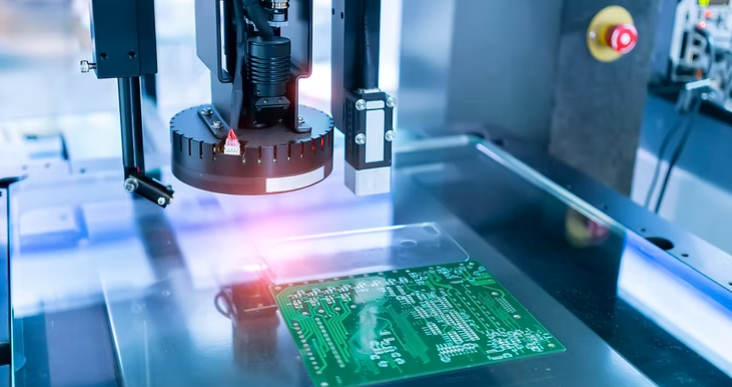
i-TECH e-Services runs conformal coating as one disciplined step inside a controlled assembly line, not a spray-booth afterthought. Liquid coating is applied on an SCS PrecisionCoat V automated selective coating system, which handles solvent-based, water-based, and 100%-solids UV-cure materials. Because it runs all three material classes, the chemistry, whether acrylic, urethane, or silicone, is chosen for the board's environment rather than limited by the equipment. Programmed valve paths place coating only where the drawing specifies and keep it off keep-outs by design, which reduces masking labor, though tight keep-outs can still require it.
Coverage is inspected under UV light against IPC-A-610 acceptance criteria, to Class 2 or Class 3 as the product requires, so the applied film is judged against a documented industry standard rather than unaided visual opinion. That coating step sits between verified upstream and downstream operations, including cleanliness control consistent with J-STD-001, moisture-sensitive bake-out, and inspection and test capability spanning automated optical inspection, X-ray, flying-probe in-circuit test, and BGA rework. Explore the quality and testing and manufacturing capabilities pages to see how these controls fit together, alongside the PCB assembly process upstream of coating.
Parylene is a different process entirely, a dedicated batch vacuum-CVD operation on separate equipment rather than something a liquid selective coater applies. When a program's barrier, biocompatibility, or outgassing requirements call for parylene, those builds are directed to a qualified specialty parylene supplier. Every coating decision starts with the environment profile and reliability class, then works back to chemistry, thickness, and inspection. To pressure-test a specification for an upcoming build, talk with i-TECH's engineering team.
Bottom line
Conformal coating selection is fundamentally an environment decision. Profile temperature, thermal cycling, humidity, chemical and abrasion exposure, and voltage, then weigh reworkability and cost. Acrylic covers benign, reworkable indoor boards; silicone handles heat, thermal cycling, and condensing humidity; parylene delivers the thinnest, most uniform barrier for the most demanding requirements, with urethane and epoxy filling the harsh-chemical and maximum-hardness gaps. Whichever you choose, cleanliness, bake-out, masking, correct thickness, and IPC-A-610 coverage inspection decide whether the coating protects the board or seals contaminants against it.