


In regulated industries where product failure is not an option, the decision of where and how to manufacture electronic assemblies carries significant weight. Original Equipment Manufacturers (OEMs) serving aerospace and defense, medical device, and industrial electronics markets face mounting pressure to reduce lead times, maintain full traceability, and meet increasingly stringent compliance requirements — all while managing cost and complexity across multi-product portfolios.
The answer for a growing number of U.S.-based OEMs is to consolidate their manufacturing under a single-source contract electronics partner — one capable of delivering turnkey PCB assembly, box build assembly services, and cable harness assembly from a single domestic facility. This article examines why this model is gaining traction and what to look for when evaluating a manufacturing partner built for complexity.
The Case for Turnkey PCB Assembly in Regulated Industries
Turnkey PCB assembly has become the preferred model for OEMs that need to move from design to production without fragmenting their supply chain. But in regulated sectors, "turnkey" means far more than component sourcing and board population. It demands a manufacturer with the certifications, processes, and quality infrastructure to handle mission-critical assemblies from end to end.
What Turnkey PCB Assembly Actually Means for OEM Programs
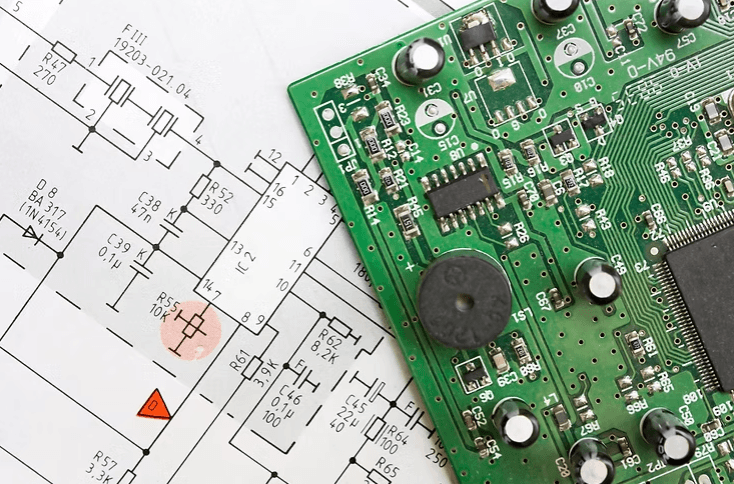
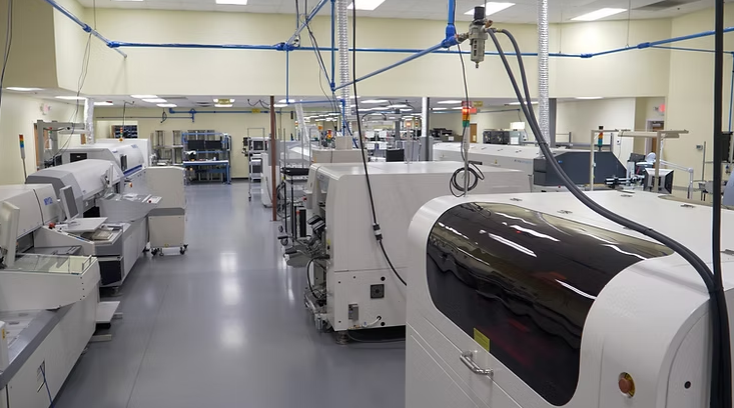
A true turnkey PCB assembly program encompasses the complete lifecycle of board-level manufacturing: procurement of all components (including long-lead and allocation-constrained parts), solder paste application, surface mount technology (SMT) placement, reflow soldering, through-hole insertion, wave soldering, cleaning, inspection, and functional testing. The manufacturer assumes responsibility for materials management, production scheduling, and quality control — freeing the OEM to focus on design iteration and market strategy.
For high-mix, low-volume programs — which are common in defense, aerospace, and medical applications — this model eliminates the coordination overhead of managing separate board fabricators, component distributors, and assembly houses. A single point of accountability reduces finger-pointing when issues arise and compresses the feedback loop between engineering and production.
Certifications That Matter — AS9100D, ISO 13485:2016, ITAR
Not all contract electronics manufacturers are equipped to serve regulated markets. OEMs should verify that their partner holds the certifications required by their end-use application:
- AS9100D — The quality management standard for aerospace and defense manufacturing, covering risk management, configuration control, and product traceability requirements beyond ISO 9001.
- ISO 13485:2016 certification for Medical Devices — The Quality Management System (QMS) standard specifically designed for organizations involved in the design, production, and servicing of medical devices. Compliance ensures that every assembly meets the rigorous documentation and process validation requirements demanded by FDA-regulated products.
- ITAR (International Traffic in Arms Regulations) — Required for any manufacturer handling defense-related technical data or assemblies. ITAR registration ensures that controlled information remains within authorized facilities and personnel.
These certifications are not check-the-box exercises. They represent embedded systems of process control, corrective action, and continuous improvement that directly impact yield, reliability, and regulatory audit readiness.
Box Build Assembly Services — From Board to Complete System
For many OEM programs, a populated PCB is only one component of the final deliverable. Box build assembly services extend the manufacturing scope to encompass the complete electromechanical system — integrating PCBAs, wiring, connectors, enclosures, displays, thermal management, and firmware into a tested, production-ready unit.
What a Box Build Assembly Program Includes
A comprehensive box build program typically covers:
- Mechanical assembly of enclosures, chassis, and sub-assemblies
- Integration of PCBAs, power supplies, fans, and thermal solutions
- Installation of cable assemblies and wire harnesses
- Connector and backplane wiring
- Label application, serialization, and asset tracking
- Firmware loading and configuration
- System-level functional testing and burn-in
- Final packaging, kitting, and shipment to end customer or distribution center
The value of box build assembly services is most apparent in programs where the OEM needs a fully integrated, ship-ready product — not a collection of sub-assemblies that require additional handling, testing, and integration at a separate facility.
Quality Assurance at the System Level
System-level quality assurance requires a different discipline than board-level inspection. Box build programs demand workmanship standards that span IPC-A-610 for electronic assemblies, IPC/WHMA-A-620 for cable and wire harness assemblies, and customer-specific requirements for mechanical fit, finish, and performance. Manufacturers operating under a 5S system maintain organized, standardized workstations that reduce variability and support repeatable assembly processes.
Automated optical inspection (AOI), in-circuit testing (ICT), X-ray inspection, and custom functional test fixtures are standard tools in a quality-driven box build environment. The goal is to catch defects at the earliest possible stage — before they compound into costly field failures.
Cable Harness Assembly USA — Why Domestic Manufacturing Matters
Cable harness assembly is one of the most labor-intensive and specification-sensitive processes in electronics manufacturing. For OEMs in defense, aerospace, and medical markets, sourcing cable harness assembly in the USA is not simply a preference — it is often a regulatory and contractual requirement.
Compliance, Traceability, and IPC/WHMA-A-620
Domestic cable harness manufacturing ensures that every assembly is built under controlled conditions with full material traceability, operator certification records, and process documentation. Assemblies built to IPC Class 2 and Class 3 workmanship standards — as defined by IPC/WHMA-A-620 — undergo rigorous visual inspection, continuity testing, and hi-pot testing to verify electrical integrity and mechanical reliability.
For ITAR-controlled programs, U.S.-based cable harness assembly eliminates the compliance risk associated with offshore production. All technical data, drawings, and specifications remain within ITAR-registered facilities, handled exclusively by authorized personnel. This level of control is non-negotiable for defense prime contractors and their supply chain partners.
Custom Cable Assemblies for Harsh Environments
OEMs operating in aerospace, military, energy, and industrial environments require cable assemblies engineered for extreme conditions — high temperature, vibration, moisture, EMI/RFI interference, and chemical exposure. Custom cable harness assembly programs address these demands through:
- Mil-spec and aerospace-grade wire and connector selection
- Overmolding and potting for environmental sealing
- Shielding and grounding configurations for EMI/RFI mitigation
- Custom strain relief and routing solutions
- 100% electrical testing with automated test equipment
A U.S.-based manufacturer with in-house cable harness assembly capability can iterate on prototypes rapidly, collaborate directly with OEM engineering teams, and scale production without the lead time penalties and communication barriers inherent in offshore sourcing.
The Single-Source Advantage — Reducing Risk Across Your Supply Chain
The most compelling argument for consolidating turnkey PCB assembly, box build assembly services, and cable harness assembly USA under a single manufacturer is risk reduction. Every additional vendor in the supply chain introduces coordination complexity, quality variability, and schedule risk.
Eliminating Multi-Vendor Coordination Overhead
When PCB assembly, cable harness fabrication, and box build integration are performed by separate vendors, the OEM assumes the role of systems integrator — managing inter-vendor communication, resolving specification discrepancies, coordinating delivery schedules, and troubleshooting quality issues that span multiple suppliers. This overhead consumes engineering resources, extends lead times, and increases the probability of errors at integration points.
A single-source partner eliminates these friction points. Design changes propagate through a unified system. Quality issues are resolved internally without cross-vendor negotiations. And delivery schedules are synchronized by a single production planning team with visibility across all work centers.
Scalability for High-Mix, Low-Volume Programs
High-mix, low-volume (HMLV) programs — where dozens or hundreds of different assemblies are produced in quantities ranging from tens to low thousands — present unique challenges that favor the single-source model. HMLV programs require flexible manufacturing cells, rapid changeover capability, and deep expertise in managing complex bills of material with thousands of unique part numbers.
A contract electronics manufacturer purpose-built for HMLV production can scale individual product lines up or down without disrupting other programs. This flexibility is critical for OEMs managing product portfolios with staggered lifecycle stages, varying demand profiles, and evolving regulatory requirements.
How to Evaluate a U.S. Contract Electronics Manufacturer
Selecting a contract electronics manufacturing partner is a decision that impacts product quality, time to market, and total cost of ownership for years. OEMs evaluating potential partners should assess the following criteria:
- Certification portfolio — Does the manufacturer hold AS9100D, ISO 13485:2016 certification for Medical Devices (with QMS compliance), ITAR registration, and IPC Class 2 and Class 3 workmanship capability?
- Vertical integration — Can the manufacturer deliver turnkey PCB assembly, cable harness assembly, and box build assembly services from a single facility?
- Quality infrastructure — Does the facility operate under a documented quality management system with AOI, ICT, X-ray, and functional test capabilities?
- Supply chain management — Does the manufacturer maintain strategic component inventory, manage long-lead procurement, and provide supply chain risk mitigation?
- Program management — Is there a dedicated program management structure with weekly communication, milestone tracking, and transparent reporting?
- Scalability — Can the manufacturer support prototype through production volumes across high-mix, low-volume programs?
- Domestic manufacturing — Is all production performed in the United States, within ITAR-registered and quality-certified facilities?
The right partner is not the lowest-cost option — it is the partner that delivers Excellent Quality, Services, and On-Time Delivery consistently across complex, regulated programs.
Partner with a Manufacturer Built for Complexity
For OEMs in aerospace, defense, medical device, and industrial markets, the path to manufacturing efficiency runs through consolidation — not fragmentation. A single-source U.S. contract electronics manufacturer that delivers turnkey PCB assembly, box build assembly services, and cable harness assembly under one roof eliminates coordination risk, strengthens compliance, and accelerates time to market.
i-TECH e-Services is a U.S.-based, woman-owned contract electronics manufacturer headquartered in Norcross, Georgia, serving OEMs across aerospace, defense, medical, energy, and industrial sectors. With AS9100D, ISO 13485:2016 certification for Medical Devices, ITAR registration, and IPC Class 2 and Class 3 workmanship standards, i-TECH delivers the quality infrastructure and manufacturing depth that complex programs demand.
Ready to consolidate your electronics manufacturing under a single, certified U.S. partner? Explore our turnkey PCB assembly capabilities, learn about our box build assembly services, or discover our cable harness assembly programs. Contact our engineering team to discuss your next project.