


A box build is a turnkey product integration: printed circuit board assemblies, cable and wire harnesses, enclosures, power systems, firmware loading, and final functional testing are delivered as a single, ship‑ready unit. This guide explains what a box build is, why OEMs and engineering teams opt for turnkey assembly, and how design, procurement, and testing must work together to produce reliable devices. You'll get a clear breakdown of core components, a practical step‑by‑step assembly workflow, common design and supply‑chain mistakes that add cost and delay, and proven ways to de‑risk production. We also show how partnering with a qualified US‑based contract manufacturer improves integration, traceability, and compliance for regulated programs. Read on for definitions, component and process details, typical cost drivers and mitigations, and a framework for evaluating turnkey partners.
What Is a Box Build Assembly? Definition and Key Concepts
A box build assembly is the end‑to‑end process that turns individual electronic and mechanical sub‑assemblies into a finished product ready for deployment. The value comes from single‑vendor responsibility: the contract manufacturer handles procurement, integration, firmware programming, and testing so the OEM has one accountable partner. That single point of ownership cuts supplier coordination, improves traceability, and simplifies logistics for production and field support. Knowing these core ideas helps procurement and engineering teams choose when full turnkey assembly is the right approach and when a limited‑scope partnership might be better.
What Components Are Included in a Box Build Assembly?
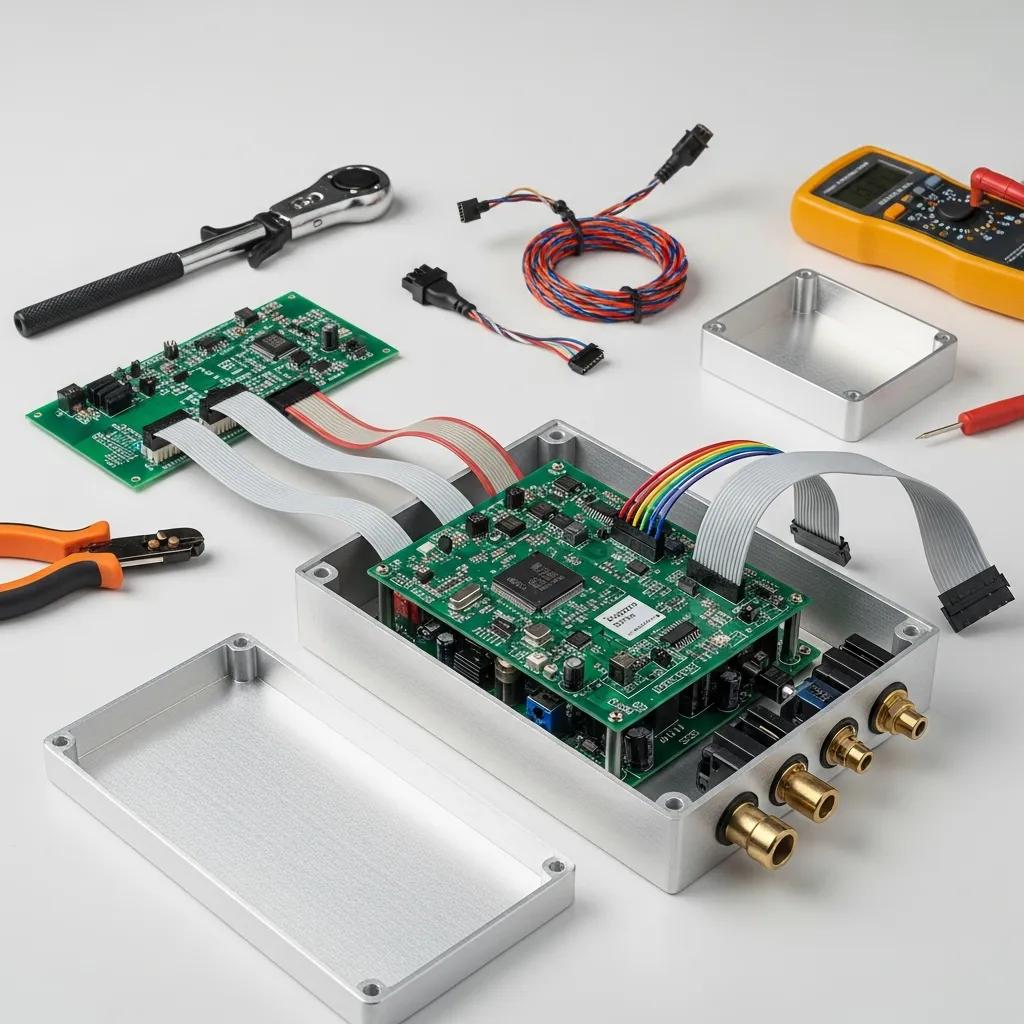
Box builds bundle several interdependent elements, each with its own sourcing, lead‑time, and test implications. Typical components include the printed circuit board assembly (PCBA), cable and wire harnesses, mechanical enclosures and fasteners, power supplies, displays or user interfaces, firmware/software loading, labeling, and final packaging. Each choice affects manufacturability — for example, enclosure tolerances drive PCBA mounting and harness routing, and connector selection determines test‑fixture design and serviceability. Early design review is critical to avoid rework and to optimize assembly throughput.
- PCBA: The electronic core that provides the product's functionality and connection points.
- Cable and wire harnesses: Interconnections that route power and signals across sub‑assemblies.
- Enclosure and mechanical parts: Structural support, protection, and thermal management.
- Power and thermal components: Regulated power delivery and thermal reliability measures.
Why Is Turnkey Electronics Assembly Important for Your Project?
Turnkey assembly becomes important when product complexity or a large supplier base adds coordination risk — common for startups, regulated industries, and distributed supply chains. The main benefit is accountability: one manufacturing partner owns integration, test, and shipment, which speeds root‑cause investigations and warranty resolution. Turnkey providers also centralize traceability and documentation, a major plus for aerospace, medical, and other compliance‑driven programs. When teams need to reduce logistics, accelerate time‑to‑market, and maintain consistent quality across builds, turnkey assembly is often the most practical route.
Turnkey assembly delivers strategic value in three ways: consolidated procurement lowers administrative overhead, integrated testing shortens validation cycles, and a single bill‑of‑materials owner simplifies change management. Those advantages make careful partner selection essential — a topic we cover later in this guide.
What Are the Core Components of a Box Build Assembly?
Box builds are collections of interdependent parts — the finished unit only performs as well as its components and their integration. The PCBA is the functional center, harnesses provide connectivity, enclosures and mechanical parts secure the assembly, and power and display subsystems deliver operation and user experience. Each element affects cost, lead time, and test coverage. Mapping cost drivers, lead‑time impact, and testing requirements early helps reduce surprises during production.
Below is a comparison table that highlights attributes important for planning and supplier selection.
ComponentTypical Cost DriverLead-Time ImpactTesting Requirement PCBA (SMT/Thru-hole)Obsolete or specialty components; complex test requirementsModerate to high when custom parts are neededICT, boundary‑scan, and functional testing Cable / Wire HarnessHigh connector density and labor‑intensive assemblyModerate; long for custom tooling or complex bundlesContinuity, hipot, and connector insertion checks Enclosure / MechanicalCustom machining, finishes, or tight tolerancesHigh when custom tooling or coatings are requiredFit verification and environmental checks Power Supply / PSUSafety approvals and certified sourcingModerate to high if certified assemblies are requiredOutput regulation, safety and hipot testingThis comparison makes the trade‑offs across subsystems clear and helps engineering teams focus DFx efforts before procurement. Next we explain how PCBAs are integrated into box builds.
How Do Printed Circuit Board Assemblies Fit into Box Builds?
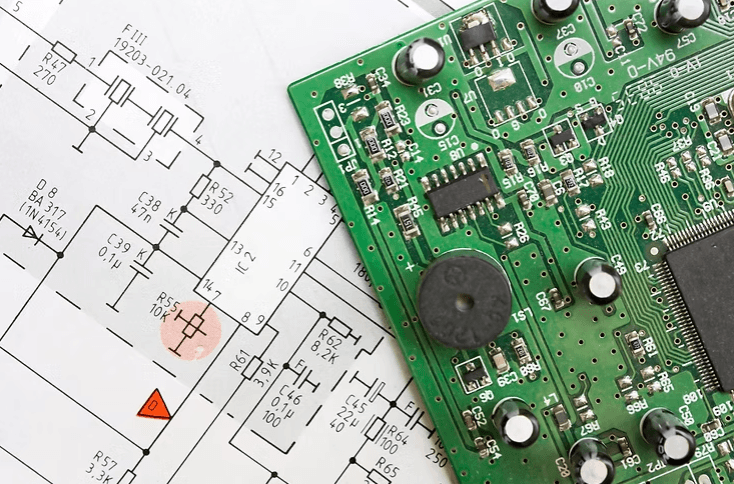
PCBAs supply the electronics functionality and often define mounting, thermal, and connector constraints the enclosure and harnesses must meet. SMT and through‑hole assemblies require handling, fixturing, and test plans that influence downstream assembly time and cost. Design choices — adding test points, standardizing connectors, and specifying mounting datums — reduce integration friction and the risk of rework. Applying DFM and DFT guidelines before production prevents costly redesigns during box‑build integration.
A common example: harness routing that conflicts with tall components on the PCBA. If not resolved early, assembly cycles lengthen and cosmetic or functional defects increase. The next section dives into cable and harness roles.
What Role Do Cable and Wire Harness Assemblies Play?
Cable and wire harness assemblies are the nervous system of a box build, connecting PCBAs, displays, sensors, and power modules while defining serviceability and strain relief. Harness design choices — conductor gauge, shielding, connector family, and clear labeling — directly affect manufacturability, test strategy, and field maintenance. Industry standards like IPC/WHMA‑A‑620 reduce workmanship variability for hand‑assembled harnesses. Well‑designed harnesses with clear labels and strain relief simplify final assembly and cut verification time in functional testing.
Typical harness tests include continuity, hipot, and connector insertion checks; these must be integrated into the test flow early to avoid late delays. With components and harnesses defined, the next section outlines a practical assembly sequence for turnkey projects.
What Is the Step-by-Step Box Build Assembly Process?
A reliable box‑build process follows a predictable sequence: design review and BOM finalization, procurement and kitting, sub‑assembly staging and verification, then final integration, firmware loading, and full functional testing. Staged verification — testing sub‑assemblies before integration — prevents cascading failures and shortens debug cycles. The result is a smoother path to shipment with documented quality checkpoints for traceability and root‑cause analysis.
Below is a concise operational table that outlines key steps, responsible parties, and expected deliverables commonly used in turnkey assembly projects.
StepResponsible PartyKey Deliverable Design review & DFxOEM & CM engineeringFinalized BOM, assembly notes, and DFx actions Procurement & kittingContract manufacturer procurementKitted components with lot traceability Sub-assembly verificationCM productionTested PCBA and harness sub‑assemblies Final integration & testCM assembly & testFully functional unit with firmware loadedThis operational view supports HowTo schema and sets clear expectations for both OEMs and manufacturing partners. Next, we cover design review practices in detail.
How Are Design and Engineering Managed in Box Build Assembly?
Design and engineering management starts with collaborative DFx reviews that reconcile mechanical and electrical constraints, establish test access, and optimize the bill of materials for cost and availability. Effective DFx uses standardized connectors, defined mounting datums, and early thermal analysis where needed. Engineering change control with documented drawing revisions preserves traceability as designs evolve, and prototype iterations validate assembly and test fixtures. These practices reduce late surprises and hasten the move from prototype to repeatable production.
When design reviews flag long‑lead or risky parts, procurement can qualify alternates and mitigate schedule risk — the procurement focus we cover next.
What Are the Key Steps in Component Procurement and Sub-Assembly Integration?
Procurement for box builds demands vendor qualification, counterfeit mitigation, and approved alternates to protect schedule and quality. Kitting and staging pre‑tested PCBAs and bundled harness kits shorten final assembly cycles and reduce operator errors. Contingency planning for long‑lead items and clear inspection criteria at receiving prevent downstream delays and keep test flows predictable. A coordinated procurement and integration plan directly supports testing strategy and steady throughput.
Clear incoming inspection criteria and supplier traceability documents reduce rework and speed component acceptance; next we describe final assembly and testing practices.
How Is Final Assembly, Software Loading, and Testing Conducted?
Final assembly brings together mechanical and electrical sub‑assemblies, enforces harness routing and strain relief, and installs displays and user interfaces before software or firmware loading. Firmware programming is performed at controlled stations with version control and checksum verification, followed by functional testing covering power‑up, signal integrity, UI checks, and safety tests (hipot where required). Test documentation with pass/fail criteria and serial‑numbered records supports traceability and field support. Thoughtful test‑fixture design and staged acceptance checks reduce cycle time and improve first‑pass yield.
Designing test stages into DFx yields smaller fixtures and faster checks, which then feed into packaging and shipping that complete the box‑build lifecycle.
What Are Common Mistakes and Cost Drivers in Box Build Assembly?
Many cost drivers and mistakes trace back to late DFx, poor connector choices, weak test planning, and unmanaged supply‑chain risk. These issues increase manual labor, rework, and expedited logistics — costs that multiply across a run. Identifying the top error classes early and applying targeted mitigations — standardizing connectors, adding test points, and qualifying alternates — reduces assembly cost and warranty exposure. Awareness of these pitfalls helps teams prioritize preventive work during design and procurement.
The next section lists the most common design and supply issues that create cost and delay so teams can address them proactively.
Top Five Design and Supply Issues That Drive Cost and Delays
- Lack of test points and DFT: Missing test access increases test time and rework.
- Non-standard connectors or proprietary parts: These require special tooling and lengthen lead times.
- Tight mechanical tolerances without assembly tolerance stack-up: Leads to fit failures and rejected builds.
- Insufficient procurement alternates: Causes allocation and expedited sourcing expenses.
- Inadequate documentation and traceability: Slows root‑cause analysis and raises warranty risk.
Addressing these items through early DFx reviews and procurement planning reduces schedule risk and total cost of ownership.
How Can Turnkey Assembly De-Risk Your Production?
Turnkey assembly de‑risks production by shifting coordination from OEM staff to a contract manufacturer with experience, tooling, and supplier relationships. Consolidated procurement reduces part shortages, and integrated test flows shorten validation cycles. One accountable partner simplifies root‑cause investigations and warranty resolution. For complex or regulated products, this model lowers administrative overhead and improves schedule confidence.
Key risk mitigations include:
- Single point of accountability: One partner owns integration, test, and shipment.
- Centralized traceability: Lot and serial records support compliance and field support.
- Qualified alternates: Pre‑approved substitutes reduce allocation risk.
- Staged verification: Sub‑assembly testing catches defects before final integration.
How Do You Evaluate a Turnkey Box Build Partner?
Evaluating a turnkey partner means verifying certifications, technical capabilities, test coverage, and communication practices. Prioritize partners with documented quality systems (AS9100, ISO 13485, ITAR as applicable), relevant industry experience, and clear project management SLAs. Site visits, reference checks, and sample test reports provide confidence beyond marketing claims.
Partner Evaluation Checklist
Evaluation AreaKey QuestionsEvidence to Request Quality SystemsWhich certifications apply to my product class?Current certificates, audit scope, CAPA examples Technical CapabilitiesCan they handle my PCB technology, harnesses, and enclosures?Equipment list, line capacity, sample test flows Industry ExperienceHave they built similar products for regulated markets?Case studies, reference contacts, compliance documentation Communication & PMWhat are SLAs for design review, PO acknowledgement, and reporting?Sample project schedules, escalation contactsWhy Choose a US-Based High-Mix, Low-to-Mid-Volume Partner?
US‑based, high‑mix, low‑to‑mid‑volume partners offer advantages for complex, regulated, or time‑sensitive products. Proximity shortens logistics, simplifies communication, and supports faster design iterations. Smaller batch sizes and flexible lines suit products with evolving BOMs or multi‑SKU portfolios. Onshore manufacturing also simplifies ITAR and other compliance requirements.
Key advantages include:
- Faster design iterations: Shorter feedback loops accelerate prototyping.
- Flexible batch sizes: High‑mix lines handle varied SKUs without large minimums.
- Simplified compliance: Onshore production eases ITAR, export control, and audit requirements.
- Single-source accountability: One partner owns PCBA, harness, enclosure, and test.
Getting Started with Your Box Build Project
Ready to move from concept to turnkey product? Start with a design review that covers BOM, test strategy, and compliance requirements. Engage a qualified contract manufacturer early to optimize DFx, qualify alternates, and plan test flows. A collaborative kickoff reduces surprises and shortens time‑to‑market.
Contact i-TECH e-Services to discuss your box build requirements and learn how our turnkey assembly services can support your next product launch.